
Opposition Scouting in 4 Pen & Paper Examples

*Originally published 26th May, 2020*
Opposition scouting on a budget often comes down to watching a game and piecing together your thoughts afterwards but, how subjective is that and how often do we see what we want to see rather than what is happening? I’ve written up 4 examples of pen and paper scouting techniques that can help build an opposition scouting report.
Team Pressing - Split the pitch into quarters and keep the direction of play the same for both halves of the game being observed. This will allow a greater concentration of data points and show any patterns more evidently. Place X where first challenge was made and O where ball was won. If both are the same location place ø. Not only will this give you an idea of how high and how successful the team are at pressing, it may also give you an idea of which players are more likely to press and if the team are focussing on specific areas of each zone to press.
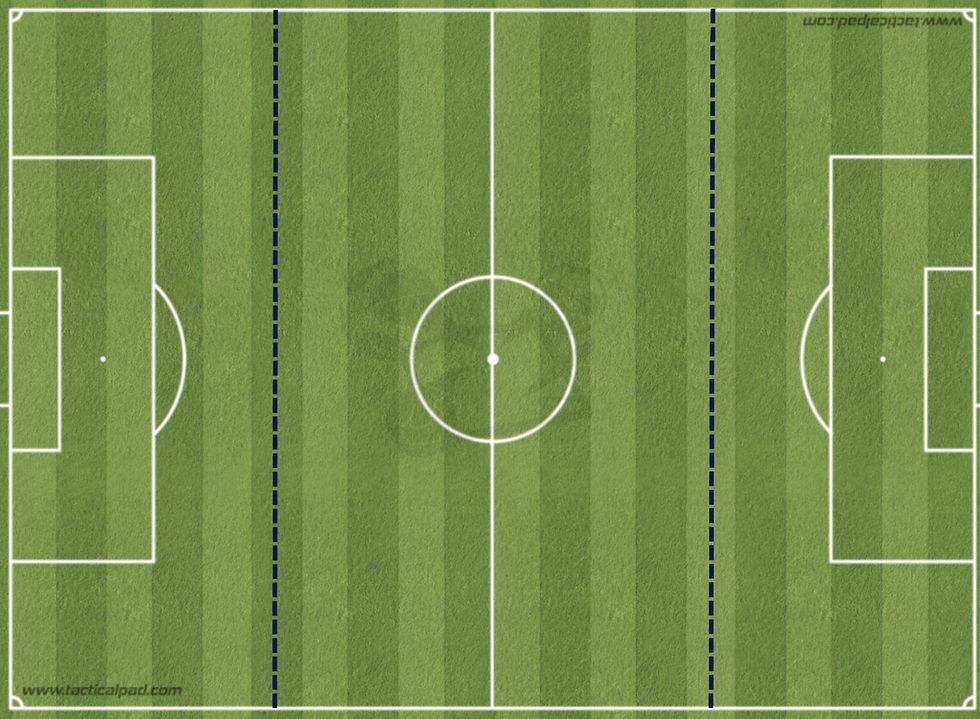


The images above show that the team pressed in zone 3 (The first zone into the opponents half) most often and had most first time tackles won to the right hand side of the centre circle. This can indicate a strong tackler in that area and also that the opposition may prefer to attack on their left hand side. Note that very little first time tackles or recoveries happened in Zone 1 (The are closest to their own goal), this could indicate a desire to challenge and win the ball higher up the pitch which could also tie in with the number of tackles and recoveries in zone 2 and 3.
Playing Out From The Back - Splitting the pitch into 3 columns, record with a line, number, or tick and cross system. Mark where each pass or throw from the keeper goes with goal kicks or open play to see where attacks are started. This can also be done for defenders playing out. This can give good indications for where to set up defensive traps.


The images above show that this goalkeeper started attacks (from goal kicks and open play) by playing into the wide channels more than the middle, 14:8, and favoured the left wing over the right, 9:5. The attempts to start attacks through the centre zone were evenly split with successful and unsuccessful attempts, 4:4. This could allow their opponents to try and force play into their least preferred channel and/or into the middle channel where there is a good chance of success.
Playmaker coverage - If you know which player from an upcoming opponent could be their key playmaker you could do a couple of things: 1) Record where the playmaker receives the ball and from where they received it. This could give you an idea of passing patterns of the opposition and allow you to stop the supply of passes to the playmaker. 2) Record where the playmaker receives the ball and what they do next and, in which direction ie turn, dribble, pass, shot etc. These two options could be combined for a more complete picture.


The first of the two images shows where the playmaker received passes during the game. The second image shows what the play did with the ball. Blue = Successful pass, Yellow = Unsuccessful pass, Orange = Dribble, Green = Shot on Target, Red = Shot off Target. Combining these images will allow opposing coaches the chance to see where the supple comes from, the area of pitch preferred to receive the ball and the most likely actions of the player. In the above example, we can see that the playmaker collects the ball numerous times from the right back and right midfield areas. Attempts shorter passes towards the centre of the field. Drifts right before dribbling towards the middle and tries longer passes into the box from cut backs or square passes from the wide right players. All this can be useful when deciding how to stop the supply to or from a playmaker.
Set Pieces - There is usually a decent amount of time between the ball going out of play for a corner and the actual set piece being taken. This can allow for a scout to record the number of players going up, starting positions and any signals given by the corner taker. It can be extremely difficult to see the movement of all the players in the box however, if you have an idea of starting positions, where the ball was delivered and any potential signals from the taker e.g. pulling one or both socks up, bouncing the ball, raising one or both arms, you will be in a better position to deal with the outcomes.


Without seeing the actual outcome from the first corner, it could be reasonably assumed that the cross from the taker is hoping to be flicked on from the player standing just inside the 6 yard box. It is likely, that the players at the edge of the box would run towards the back post for that flick on and the player positioned at the far side of the box is an insurance policy against the ball missing everyone in the middle. The second corner sees two players standing in position around the opposition goalkeeper. From where the cross was aimed we could know in advance what to prepare for when seeing two ‘blockers’ or a player set up at the front of the 6 yard box.
Each of the four examples above can be done with a pen and paper watching a game without any scouting software. Yes, it may be tricky to take down some of the positions and actions if they happen at high speed And the data is only as reliable as the person watching the game however; being able to understand patterns of play from your opponents could lead to some extra points on the board come the end of the season.


Comments