
Checking The Shoulder - What's Involved

I recently read a few posts and threads on twitter about 'Checking The Shoulder' and how many coaches call for players to do that during training and games without the players, or the coaches themselves, knowing the true extent of what that comment means.
We, as coaches, expect players to see the options around them, pick the right one, and execute effectively. However, how much time has been spent coaching these players on what they are looking for? I'm working with players who compete in the highest league within the province and often find myself going over fundamentals. I don't mean to take aim at the players or their previous coaches but I do find myself asking the players if they have ever done, or been taught 'X' and the response is often negative. What do these coaches do in their sessions?
To check the shoulder effectively, I think requires 4 things:
1) Recognise where the space is.
2) See the opponents.
3) See your teammates.
4)Understand the message your teammates are conveying.
Whilst this is not an exhaustive list, I believe these four things instilled in players from a young age will help them immensely and, allow for greater and further development when players get to higher levels.
Below I have added some progressive exercises that could help players develop awareness of their surroundings and allow them to be truly effective when checking the shoulder.
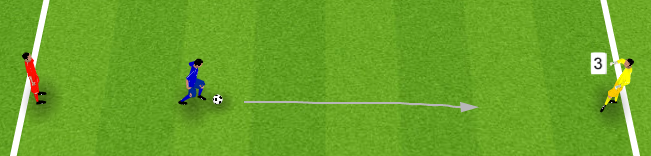
Numbers - Working in 3's, players dribble towards one of their partners and have to call out the number of fingers being held up by their partner. When a number is called correctly, the partner changes the number and keeps doing so until the player on the ball reaches them. This helps players develop confidence in dribbling with their head up and, begin to look for their teammate and the signals they are giving out.
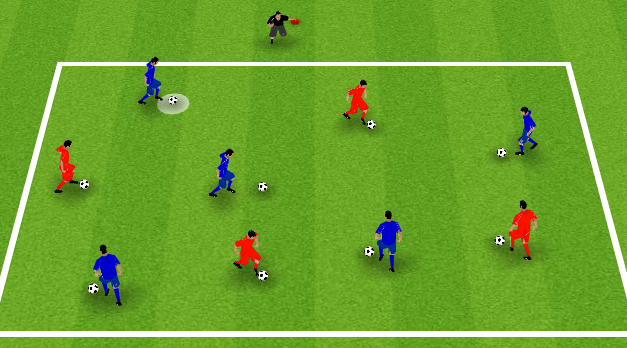
Traffic Lights - In a box with numerous other players dribbling around, a coach holds up one of 3 cones (red, yellow or green) as they move around the outside of the box and players have to do a corresponding task. This develops players awareness around them, moving through traffic whilst dribbling and, checking left and right to find the coach and respond.
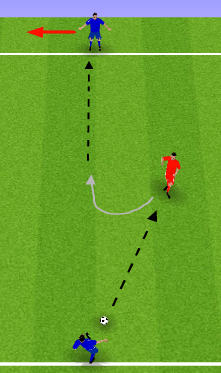
Directing Traffic - Working in 3's, players pass to one another with the 2 outside players directing the centre player which way to turn when receiving the ball. As the ball is passed into the middle, the centre player must position themselves to see the opposite end player, control the ball effectively and turn in the direction pointed by the end player. A progression to this can be the opposite outside player raising neither hand. In this situation, the middle player must play a first time pass back to the outside player. Develops off-the-ball movement, positional awareness, teammate awareness and enacting the message received.
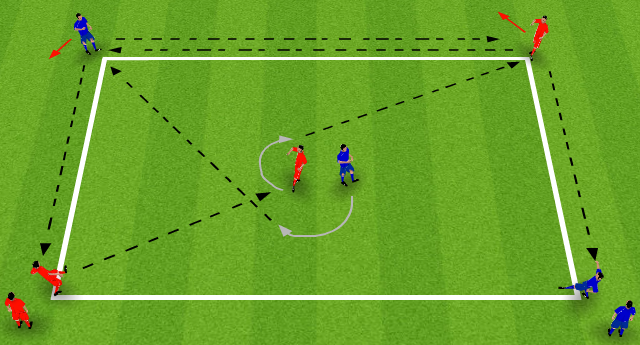
Criss-Cross - In a large area, players on the outside corners pass into their player in the middle. The middle player must move away from their 'opponent', check their teammate's signal and turn in that direction before passing to the diagonally opposite corner. The players on the opposite corners must make eye contact before swapping footballs and then passing back to the start. This multifaceted exercise works on movement into space, awareness of opponents, recognition of teammates, eye contact and, of course, passing and control.
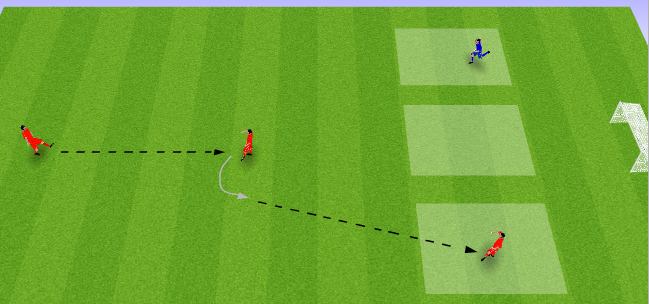
Where's The Space? - In this exercise, a player receives the ball from a teammate and must turn towards 3 boxes; in the 3 boxes there is a teammate, an opponent, and space. The teammate and opponent may be in different boxes, as shown, or, may be in the same box. The worker needs to decide if the teammate is in a good passing position or not. This exercise can be progressed to include a goal behind the 3 boxes and the worker may decide to dribble to an empty box to try and shoot. The defender can react to the worker. This develops awareness and execution.


Comments